I Never Held the Brush
The first episode of The Next Renaissance was made by a pipeline built on one rule: be wrong early. These are its stages, and the few places where a person still has to decide.
By Jason Waldrip 17:05 7 min read
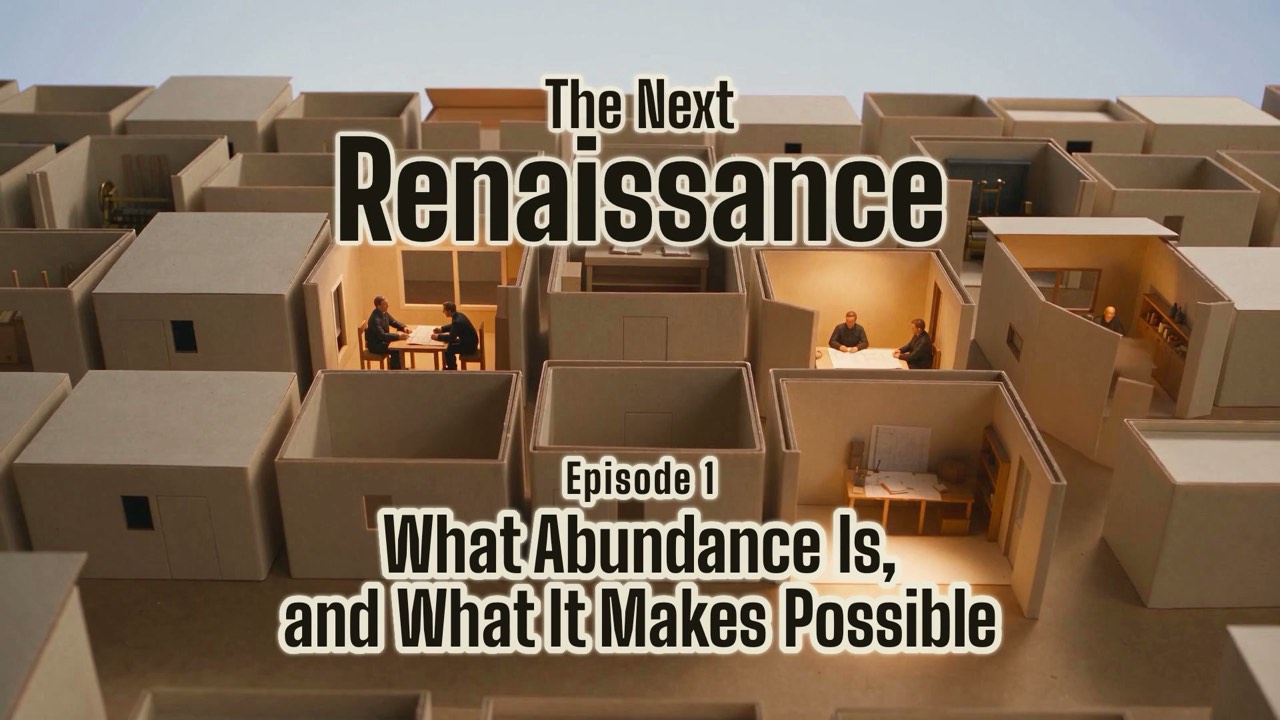
The Next Renaissance · Episode 1:What Abundance Is, and What It Makes Possible
This film includes AI-generated visuals and narration.
By the time the first frame of my film was generated, every decision that could sink it had already been made. The pipeline that made it is built to work that way.
The film is The Next Renaissance: Episode 1. It runs 8:33 and it’s adapted from an essay I wrote in August. I didn’t shoot it, draw it, edit it, score it or read the narration. It was made by Backlot, a production pipeline I’ve been building this fall, with an AI agent running it.
Backlot starts from one belief: the worst mistake in a film is making the wrong one, and the usual place to find that out is the end, when every fix means making footage twice. So the rule is to be wrong early. Words come first, because a sentence is the easiest thing in a film to change. Then sketches. Then a rough cut of the sketches with sound. Footage comes last. Machines do the making at every stage, and nothing moves to the next one until a person has said yes to the rough version.
Getting that “yes” right took a few tries.
words
The agent drafted the script from my essays, and some of that it can police by itself. Every number in the narration has to appear in a source that was opened and logged, and a claim without one doesn’t get said. One source’s page returned an error during review, so the film doesn’t quote it or paraphrase it.
What a machine can’t police is whether the script is any good. For a while Backlot tried. It had a panel of ten simulated viewers, personas played by language models, who read each draft and predicted where they’d stop watching. Six drafts got steered toward keeping them. Then I read the sixth and wrote back: “You judged who would keep watching with AI. I did not understand the story.”
The panel is gone, deleted outright. What replaced it was me saying what the film is about in one breath, “its about the time we CAN get back and how EASY the labor is now and its something people leverage,” and four more drafts built on that. I read the tenth and typed “lock it.”
pictures
A locked script becomes a board: every shot as a rough sketch, sitting beside the line it plays under. The notes at this stage aren’t about facts or wording. They’re about how the thing feels: “the entire film seems rural in nature. which seems unauthentic.” The board was on its ninth version when I approved it.
Approving it is the one step the agent can’t do for me. A message from me saying it looks fine doesn’t count. Silence doesn’t either, though an early version of Backlot treated a review with no comments as a pass. The greenlight is a decision I record in the review viewer with a passkey, and it’s bound to the exact script and shot list I looked at. Change a word afterward and the approval is void, and the pipeline refuses to generate. There’s no exception for small edits, because the one deciding whether an edit was small would be the agent that made it.
time
A board can read well and still drag. So before any footage exists, the sketches get cut to length under a scratch voice and a temp score. It’s rough on purpose. It exists so somebody can sit through the whole film before any of it is made for real. For this episode that somebody was me, and my entire review was “looks good. build it.”
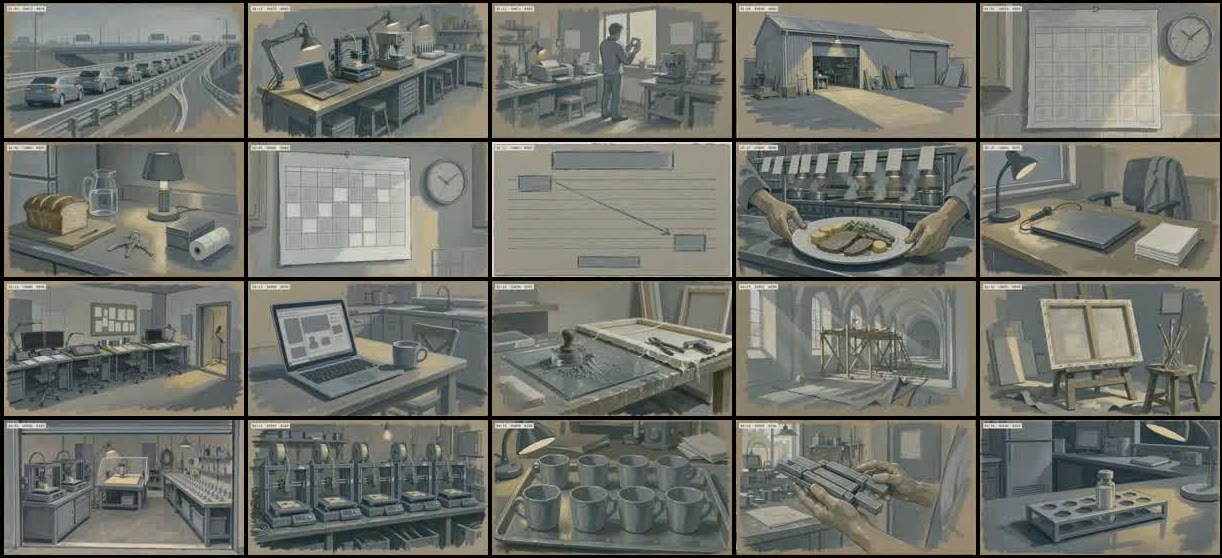
Twenty frames from the animatic. Painted studies standing in for footage that didn’t exist yet.
footage
Only then does Backlot generate footage, and it checks first. Without a recorded greenlight and an approved animatic, generation refuses to start. The plan called for 49 shots, each with a written contract. Getting them took more than two hundred generations.
All of it runs inside bounds. Every stage gets a budget before it starts, the sketches and the animatic included. Backlot reserves the spend before each call rather than adding it up afterward, and when a stage reaches its limit it stops. Retries are bounded the same way: the count belongs to the shot, so rewriting the prompt doesn’t buy a fresh set of attempts. Raising a limit is a decision, and the agent can’t make it. It has to ask me.
Backlot has machine judges for footage, and it gives one a vote only after it’s been proven on a known-bad example. The standing test swaps a blue sailboat in for a shot that’s supposed to be a red delivery van. A judge that doesn’t reject the sailboat is decoration. For photographic footage like this film’s, none of them has passed that kind of test yet. So they advised, and I decided.
That happens in review. The cut goes up at a link and I leave notes pinned to the second they’re about. Each note maps to a shot and sends it back for repair, and the cut can’t be republished while a note is still open. The first full cut drew twenty-four.
A note gets exactly the repair it describes. I flagged a shot of a woman typing and said it looked uncanny. The agent regenerated the hands thirty-four times. The hands were fine. The screen she was typing into never reacted to her, and I hadn’t said so. One precise note later it was fixed.
where the judgment went
Line my notes up by stage and they shrink as the film gets real. On the script: what is this film about? On the board: what does it feel like? On the animatic: does it hold? On the cut: this shot, this second. Nothing I said in that last round could have sunk the film, because everything that could was settled back when it was still words and sketches.
The drafting, drawing, scoring, generating and cutting were all done for me. What stayed with me was a short list: what the story is, how it should feel, whether it works, how far the budget stretches, and when it’s done. The one time the pipeline took an item off that list, with its panel of invented viewers, I couldn’t follow my own script.
That’s also the film’s argument. Episode 1 says machines are taking over the labor while judgment and vision stay with people, and its narration has a line for it: “You may not be holding the brush anymore. You’re still the painter.” Backlot is my attempt to build that sentence as a machine.
It has gaps. Characters still drift between shots that were generated separately. The judges for photographic footage haven’t earned their vote. And “every shot passed” has never meant the film was good. Somebody still has to watch it.
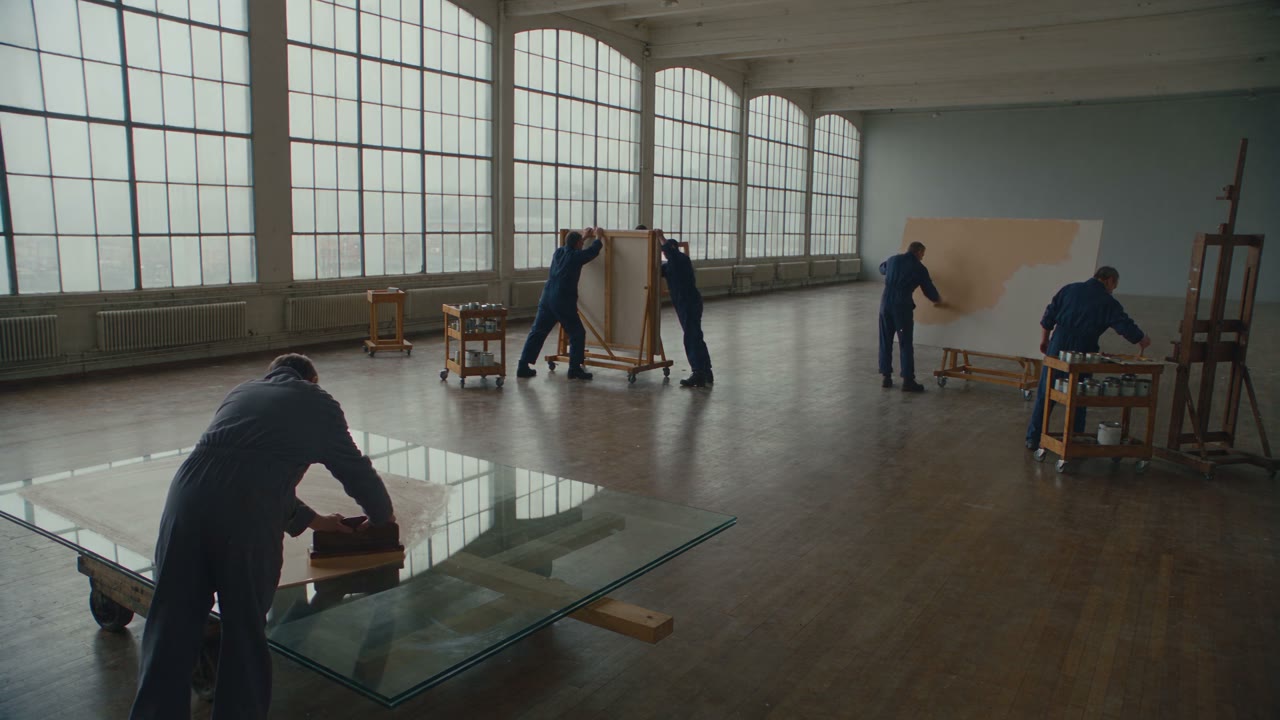
3:51 in the finished film. The painter’s studio.
Episode 2 starts where this one did, in a text file. Watch the first one.
the paper trail
Each stage left something to look at. These are clean copies.
- Script draft, an early one. The final narration moved from it.
- Storyboard, sketch frames for every shot.
- Animatic, the rough cut before any footage was generated.
- Take review, the first batch of generated shots.
- The typing takes, thirty-four tries at the hands.
Jason Waldrip is a builder, entrepreneur, and technologist. He takes on fractional CTO and CAIO work through The Bushido Collective, for founders drowning in AI-generated code and teams scaling past the leadership that got them here. Work with me.
Written with AI assistance. The direction is mine, and so is every quoted note, typos included.